Sometimes life takes us down paths we never expected, but which eventually leads us somewhere surprising, in a good sense. That is precisely what happened to Eleonora Crenna, ANEMEL researcher at the University of Applied Sciences of Western Switzerland (HES-SO).
She studied a master’s degree in Natural Sciences, specialising in Zoology and Conservation Ecology. Then she realised it was “kind of not enough”. “I wanted to understand a bit more about the interaction between human beings – the way we live, consume, and produce – and nature,” she explains. She then pursued a PhD in Environmental Science, focusing on biodiversity and Life Cycle Assessment (LCA), which allowed her to explore this topic further.
LCA is a quantitative methodology used to assess the potential environmental impacts of a product or service throughout its entire life cycle. And that is precisely what Crenna does in ANEMEL: she applies LCA to hydrogen production systems. This makes her a LCA expert. She was not, however, an expert in the use of hydrogen in the energy sector. But ANEMEL gave her the opportunity to learn a lot about the field – and “to meet cool people”, which is always a bonus.
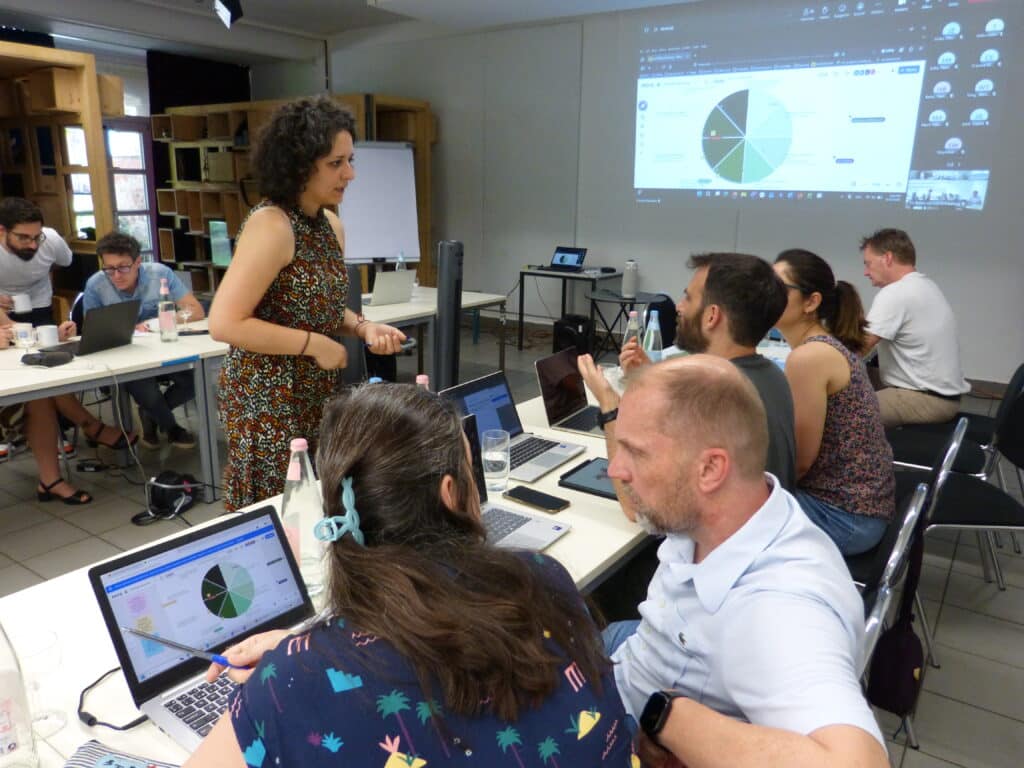
In any case, being an expert in this topic wasn’t really a must for our researcher, as the LCA work she carries out in ANEMEL is highly collaborative. Her role within the project involves collecting data from the rest of the team, calculating environmental impacts and, importantly, interpreting and using the results.
At the beginning of the project, her work was therefore “mostly meetings, meetings, meetings”. One important part of these meetings was education: explaining LCA and the kind of information needed.
Crenna is interested in the data about the different components of our stacks, including the materials used, the energy involved and how researchers deal with waste, as well as information about the different stages of the hydrogen production value chain. Once all the information is collected, it is incorporated into a software specially designed for life cycle assessment to calculate the environmental impacts.
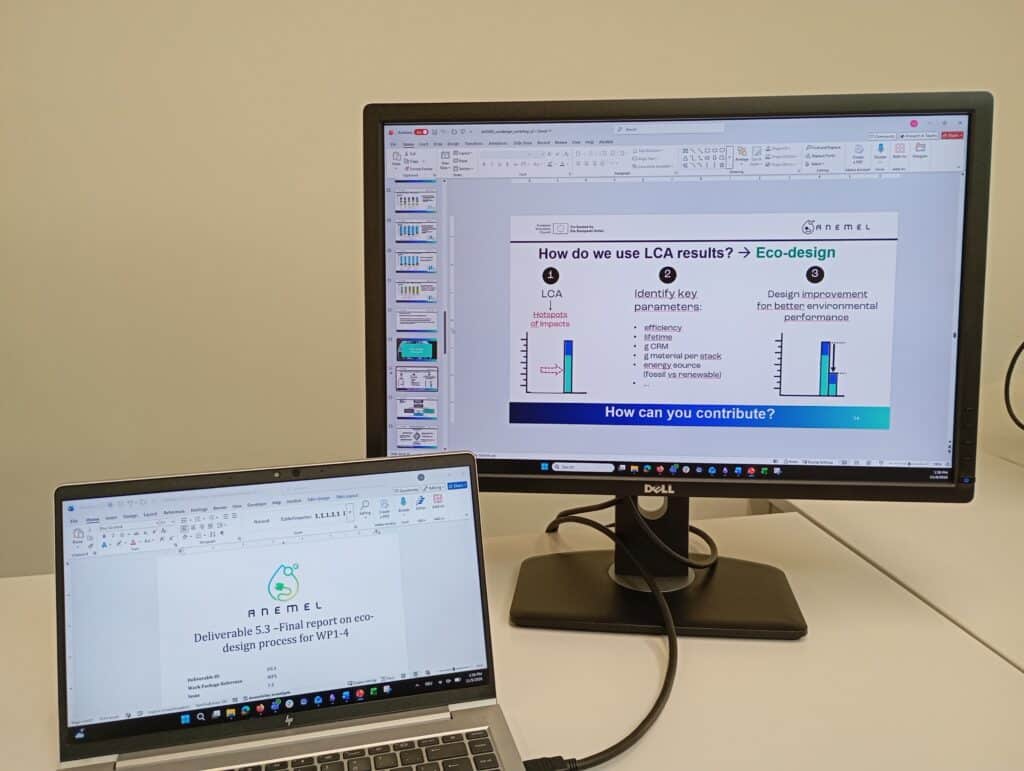
But getting the results is far from the end of the process. The next – and arguably more important – step is interpreting and applying them. With these results, Crenna can help our researchers identify opportunities to reduce the environmental impact of the technology. “Maybe certain materials associated to certain designs are not the best choice in term of their environmental performance, so we can brainstorm together about which materials and which design could have a lower impact while still maintaining the technical performance”, she explains.
For example, we managed to switch to thinner plates made of aluminium with a high recycled content for the plates that make the external part of our electrolysers, lowering their environmental impact compared with the very first version of the stack proposed, where the end plates were thicker and made of nickel-coated stainless steel. This change reduced the environmental impact of the end plates used in the stack by circa three times.
The environmental impact of ANEMEL’s electrolysers is not the only aspect of sustainability being assessed in the project. The consortium is also looking at social and economic aspects. This means close collaboration between Crenna and the experts working on these two areas. Why? We need to have the same model of the value chain of hydrogen production to make sure that we do analyses that reflect the impacts of the same system. As you can see, thanks to Crenna’s work, we can make sure that our green hydrogen is truly green. If you’re not familiar with the different colours of hydrogen, take a look at this post.